
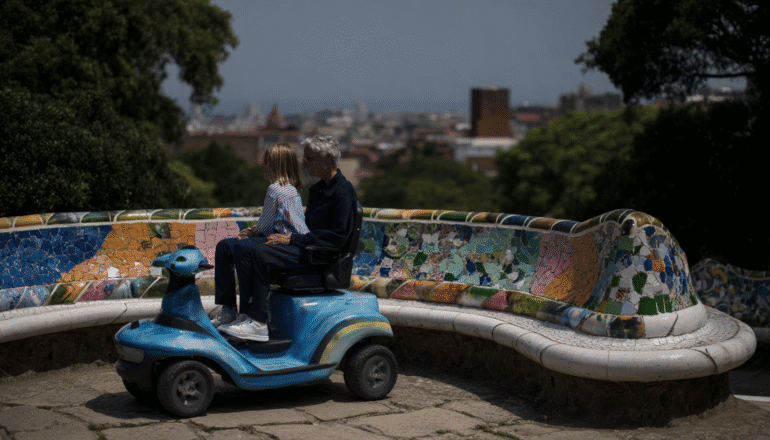
Spain has made great strides in accessible tourism in recent years, and while there is still progress to be made, some destinations genuinely stand out for their real commitment to inclusive tourism. Here is what makes each special and what to bear in mind before visiting.
1. Madrid: the capital that has invested most in accessibility
Madrid is today one of the most accessible cities in Europe for wheelchair users. The metro has lifts at the vast majority of its stations, the Paseo del Arte museums (Prado, Reina Sofía, Thyssen) offer full adapted access, and the historic centre has removed most of its architectural barriers.
- The Retiro Park has wide, well-paved paths
- The Prado Museum offers accessible tours with free wheelchair loan
- Bear in mind: the oldest neighbourhoods (La Latina, Lavapiés) still have cobbled, sloping streets
2. Valencia: beach, culture and an adapted city
Valencia combines accessible beaches, gastronomy and culture very well. Malvarrosa beach has wooden boardwalks, amphibious chairs and adapted bathing services in season. The City of Arts and Sciences is fully accessible.

3. San Sebastián: the northern gem
It surprises with how well it has tackled accessibility given its hilly topography. La Concha beach has boardwalks and amphibious chairs in summer, and the seafront promenade is completely flat and wide.
4. Lanzarote: volcanic nature without barriers
The island council has made a genuine commitment to accessibility. The César Manrique Foundation, Jameos del Agua and Cactus Garden have adapted routes. The year-round excellent climate makes it ideal at any time. Bear in mind: volcanic surfaces can be difficult for standard wheelchairs.
5. Barcelona: accessible with careful planning
The Sagrada Família, the MNAC and Passeig de Gràcia are very wheelchair-friendly. The Gothic Quarter has complicated cobbled areas. The metro has a good lift network, though not at every station.
6. Toledo: more accessible historic heritage than it looks
There is an official accessible tourist route through the historic centre. The Alcázar has full adapted access and the tourist train has accessible spaces. Many areas of the old town require a specifically planned accessible route.
7. Menorca: tranquillity and inclusivity in balance
Some southern beaches (Son Bou, Sant Tomàs) have boardwalks and accessible services. Ciutadella and Maó have well-adapted pedestrian areas. The island’s unhurried pace suits a relaxed trip.
8. Málaga: sun, culture and growing accessibility
The Picasso Museum, Carmen Thyssen and the Seafront Promenade are well adapted. La Malagueta beach has accessible bathing services in season. The city has well-distributed adapted parking.
Would you like more information about any of these destinations? We can help you plan your trip with a full accessibility guarantee. Get in touch.
