
Rights, key steps and upcoming changes in the European Union
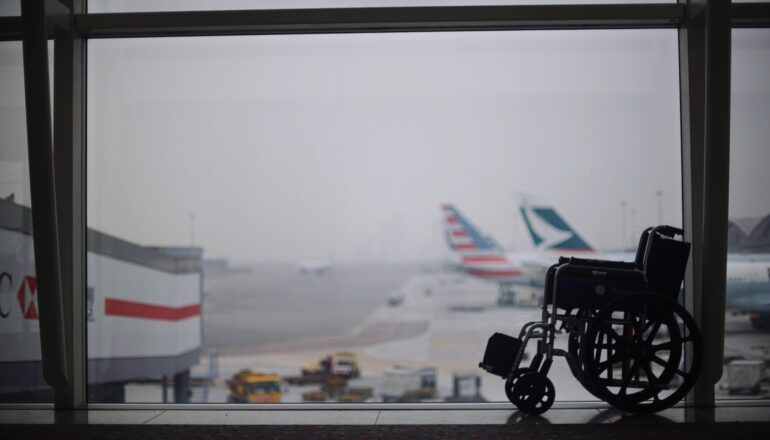
Flying with a wheelchair or any other mobility aid requires much more careful planning than travelling with standard luggage. And there is one basic idea we need to start with: a wheelchair is not a suitcase.
For many people with disabilities, their wheelchair means independence, mobility, safety and continuity once they arrive at their destination. So when an airline damages it, loses it or returns it in poor condition, this is not just a logistical incident. It is a situation that can affect the entire trip.
In this article, we explain what rights exist, what steps you should take and what changes are being discussed in the European Union to strengthen the protection of people with disabilities and persons with reduced mobility when travelling by air.
Before you travel: prevention is also part of the journey
The first step to reducing risks begins before you even arrive at the airport.
If you travel with a manual wheelchair, electric wheelchair, scooter or any other mobility equipment, it is advisable to inform the airline at the time of booking. In Spain, you can also request the assistance service for persons with reduced mobility at Aena airports.
Ideally, this should be done at least 48 hours in advance. When doing so, it is useful to provide:
- The type of wheelchair or mobility aid.
- Approximate dimensions and weight.
- Whether the wheelchair is manual, electric or a scooter.
- Battery type.
- Whether you need to use your own wheelchair up to the aircraft door.
- Specific support needs during boarding and disembarkation.
It is also advisable to carry the technical documentation for your wheelchair, especially if it has a battery. Lithium batteries over 300 Wh are not permitted on commercial flights, and many mid-range and high-end electric wheelchairs exceed this limit. Before flying, it is important to check the exact battery type and capacity with the airline, as each company may apply its own criteria.
What the airline can and cannot do
European regulations recognise specific rights for people with disabilities and persons with reduced mobility travelling by air.
An airline cannot refuse a booking or deny boarding because of a disability or reduced mobility, except in specific cases related to safety, aircraft size or the physical impossibility of boarding. If this happens, the airline must explain the reasons and offer reasonable alternatives.
In addition, airlines must transport mobility equipment free of charge, including manual or electric wheelchairs, within the limits established by regulations and aviation safety requirements.
This does not mean that everything is automatic. In practice, conflicts may arise due to:
- Lithium batteries.
- Lack of communication between the airline, handling company and airport.
- Insufficient staff training.
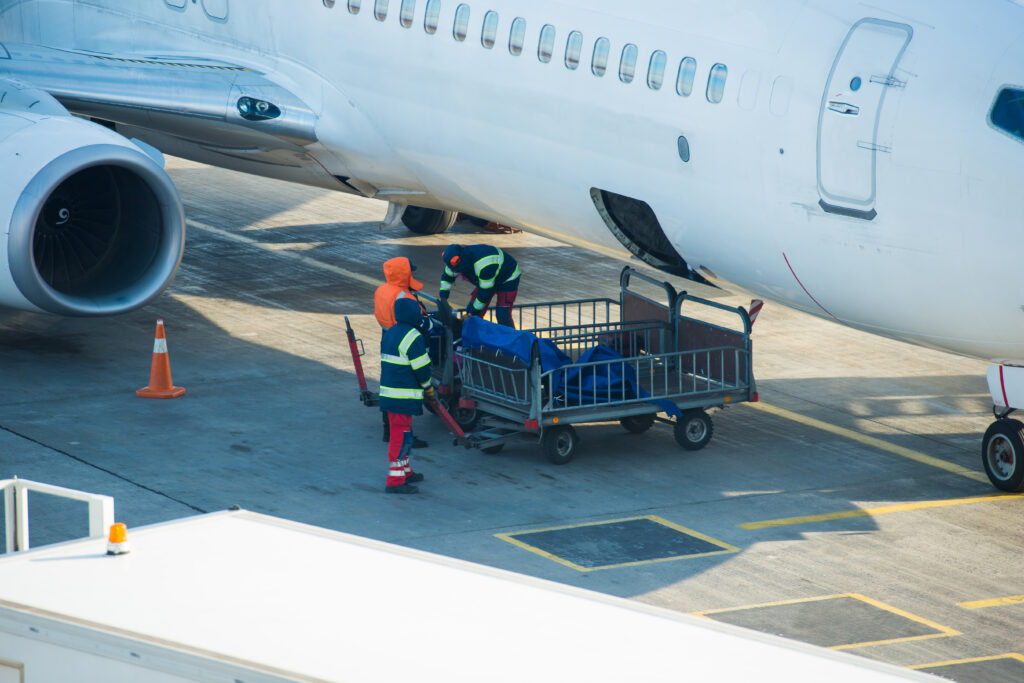
- Poor handling of mobility equipment.
- Late delivery or delivery to the wrong point.
- Lack of an equivalent solution if the wheelchair is damaged.
This is where prior information and documentation become essential.
What to do if your wheelchair arrives damaged
If, when you arrive at your destination, you notice that your wheelchair, scooter or mobility aid has been damaged, do not leave the airport without reporting it.
These are the recommended steps:
- Check the wheelchair before leaving the arrivals area. Inspect the wheels, footrests, controls, joystick, batteries, brakes, frame, cushion and any removable parts.
- Take photographs and videos. Record the whole wheelchair, the specific damage, baggage tags, flight number and any other element that may help prove the condition in which it was returned.
- Report the incident immediately. Go to the airline counter, the handling agent or the desk responsible for baggage incidents.
- Request a Property Irregularity Report, known as a PIR. This document is key to proving that the incident was reported at the airport.
- Ask for a temporary solution. If the wheelchair cannot be used safely, you should request an alternative that allows you to maintain mobility while the claim is being processed.
- Submit a formal written complaint to the airline. Filling in the PIR is not enough. The PIR records the initial incident, but a formal claim must then be submitted.
- Keep all documentation: tickets, boarding passes, baggage tags, PIR, photographs, videos, invoices, technical reports, repair estimates and all communications with the airline.
The most important point: do not accept the situation as a simple baggage issue. Clearly explain that this is essential equipment for your independence.
Deadlines you should not miss
In baggage-related incidents, the deadlines under the Montreal Convention are very tight. Although a wheelchair should not be treated as ordinary luggage, in practice many procedures are handled under baggage rules.
That is why it is important to act quickly:
- In the event of damage, submit a written complaint within a maximum of 7 days from receiving the wheelchair.
- In the event of delayed delivery, the deadline is 21 days from the moment you receive the equipment.
- In the event of loss, there is no single fixed deadline, but it is advisable to claim as soon as possible.
In addition, if the airline does not respond properly or the response is not satisfactory, in Spain you can contact AESA for complaints related to passenger rights and persons with reduced mobility, always after having first submitted a complaint to the airline.
The major issue: compensation may not cover the real cost
This is one of the biggest problems.
Many wheelchairs, especially electric or customised models, can cost thousands or even tens of thousands of euros. In addition, replacing a single part is not always enough: a poorly adjusted wheelchair can affect the person’s posture, safety, independence and health.
However, the current framework has generated conflicts because compensation may be limited by rules originally designed for luggage, not for essential mobility equipment.
The European Commission has recognised that mobility equipment is crucial for the independence of people with disabilities and that repair or replacement can be very expensive. It has also noted that, in some cases, the compensation limits under the Montreal Convention may not cover the actual cost of repair or replacement.
For this reason, before travelling, it may be useful to ask the airline whether it allows a special declaration of value for the wheelchair or mobility aid, and to review your travel insurance to confirm whether it covers damage, loss or temporary replacement of mobility equipment.
What temporary solution can you request?
When a wheelchair is lost or damaged, the problem does not end with opening a claim. The person needs to move at that very moment.
That is why one of the most important things is to request a temporary solution. This may include:
- A replacement wheelchair.
- Urgent repair.
- Additional assistance at the destination.
- Accessible transport to the accommodation.
- Reimbursement of necessary expenses arising from the incident.
The solution must allow the person to maintain, as far as possible, their mobility and independence. A generic wheelchair may not be enough if it does not meet the person’s postural, physical or functional needs. This is another important issue: replacing something is not always the same as repairing the damage.
If the airline does not respond
If the airline does not respond or its response is not satisfactory, the next step is to submit a complaint to AESA, provided that the case falls within its area of competence.
In Spain, the usual procedure requires:
- Submitting a previous complaint to the airline.
- Waiting for a response or for the established period to pass.
- Filing a complaint with AESA if there is no response or if the response is not satisfactory.
- Providing all available documentation.
AESA’s decision may be binding for the airline in certain procedures. If the airline does not comply, the person may request enforcement before the competent court.
At the same time, when claiming specific financial damages not covered through the administrative route, it may be necessary to go to court. In such cases, specialised legal advice is advisable.

Upcoming changes in the European Union
The European Union is reviewing the framework for air passenger rights. In June 2026, the Council and the European Parliament reached a political agreement to strengthen passenger rights, although the text still has to be formally adopted following legal-linguistic review.
Among the expected changes are measures that directly affect people with disabilities and persons with reduced mobility:
- Strengthening of assistance rights.
- Priority in assistance and rerouting.
- The right to travel with mobility equipment and assistance dogs without having to pay additional insurance.
- Free replacement of mobility equipment if it is lost or damaged.
- New compensation rights when airports fail to provide adequate assistance.
- Clearer complaint procedures.
- Airline response within a maximum of 30 days in certain cases.
- Better passenger information obligations.
Recent European proposals have also suggested that companies and operators should publish information on how they comply with their obligations, including data on lost or damaged mobility equipment, complaints received and outcomes.
This is a relevant step forward, although the final text will need to be reviewed once it is officially published in order to confirm the exact scope of the new obligations.
Why travelling with a specialised agency can make a difference
When organising an accessible trip, it is not enough to book a flight and request assistance.
It is necessary to anticipate scenarios, review documentation, confirm conditions, coordinate services and know what to do if something goes wrong.
At TUR4all Travel, we work precisely from that perspective: we do not just sell destinations; we design experiences based on each person’s real needs. That means asking questions, checking information, verifying details and providing support throughout the process.
Because travelling with purpose also means travelling with information, rights and safety.
Quick checklist before flying with a wheelchair
Before the trip:
- Inform the airline about your needs.
- Request PRM assistance at least 48 hours in advance.
- Carry the technical data sheet for your wheelchair.
- Photograph the wheelchair before checking it in or handing it over.
- Identify removable parts.
- Keep cushions, removable controls or delicate parts with you whenever possible.
- Check battery restrictions.
- Keep all confirmation emails.
At the airport:
- Check how your wheelchair is labelled.
- Ask where it will be returned to you.
- If you can use it until the boarding gate, request this.
- Keep tags and supporting documents.
- Check the condition of the wheelchair on arrival.
If there is damage:
- Do not leave the airport without reporting it.
- Request a PIR.
- Take photos and videos.
- Submit a written complaint.
- Keep invoices, reports and repair estimates.
- Request a temporary solution.
- Contact AESA if the response is not satisfactory.
Key takeaway
Your wheelchair is not luggage.
It is independence.
It is mobility.
It is an essential part of your journey.
And knowing your rights can make the difference between a poorly managed incident and an appropriate response.
