
There are plenty of articles online with beautiful photos of accessible hotels and boardwalk beaches. But very few talk about what really happens when you travel with reduced mobility: the hotel that promised to be accessible but has a shower screen blocking the transfer, the lift that is out of order when you arrive, or the tour guide who simply doesn’t know how to help you.
This article is not meant to put you off travelling. Quite the opposite — we want you to travel with your eyes wide open, so you can anticipate the most common problems and truly enjoy your trip.
Problem 1: The ‘accessible’ hotel that really isn’t
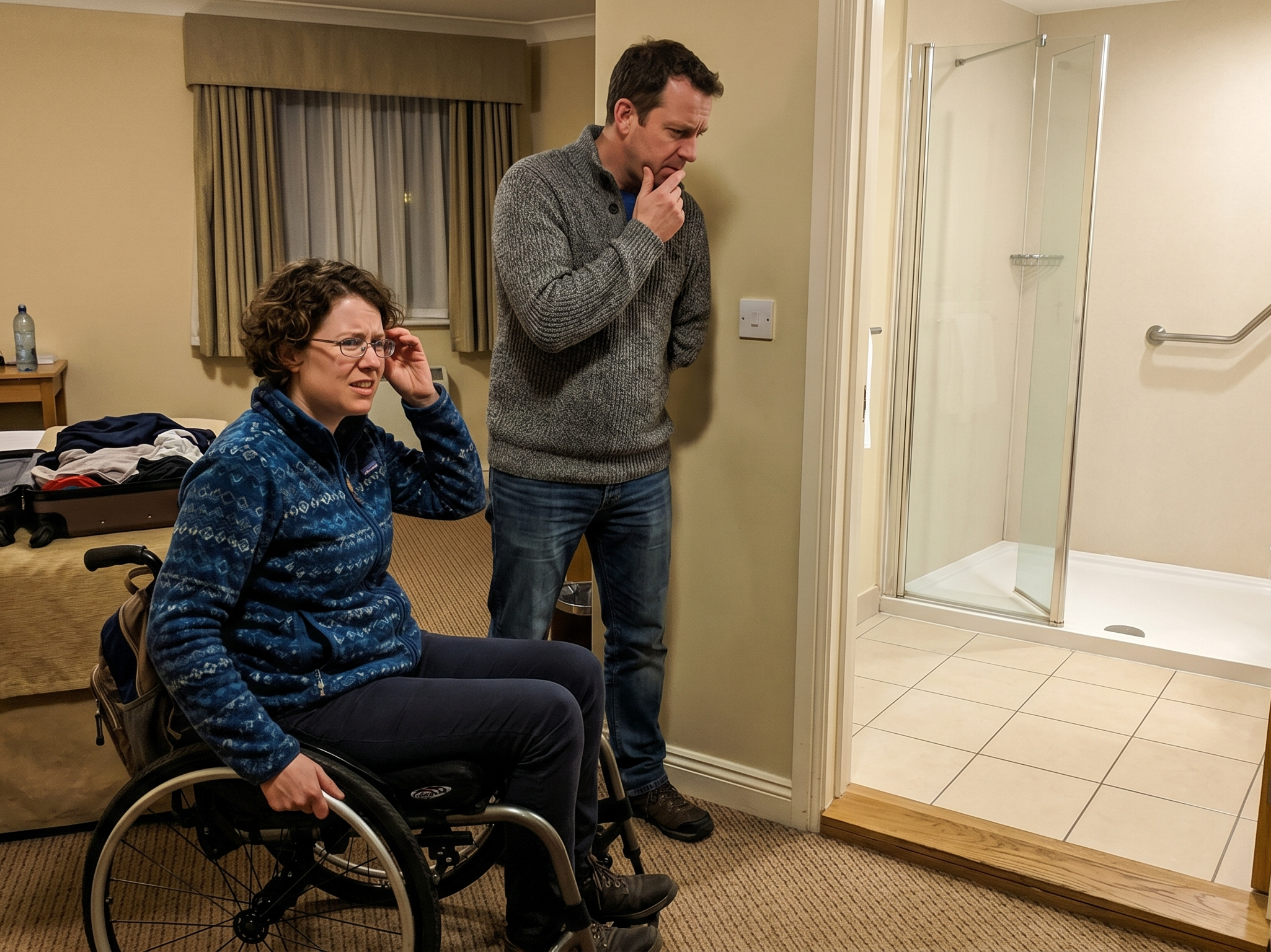
This is the most frequent and most frustrating problem. Many hotels label themselves as accessible without any real verification: grab bar on the wrong side, shower with a 5 cm step, glass screen preventing the transfer.
How to avoid it: Always call the hotel before booking. Ask for specific photos of the adapted bathroom and entrance. Check reviews left by other wheelchair users. A specialist agency will already have verified these details for you.
Problem 2: The wheelchair arrives damaged from the plane
It happens more often than it should. To avoid it: photograph the wheelchair in detail before checking it in, carry a document with the model and value, and inspect it before leaving the airport. Report any damage immediately at the airline’s desk (PIR report).
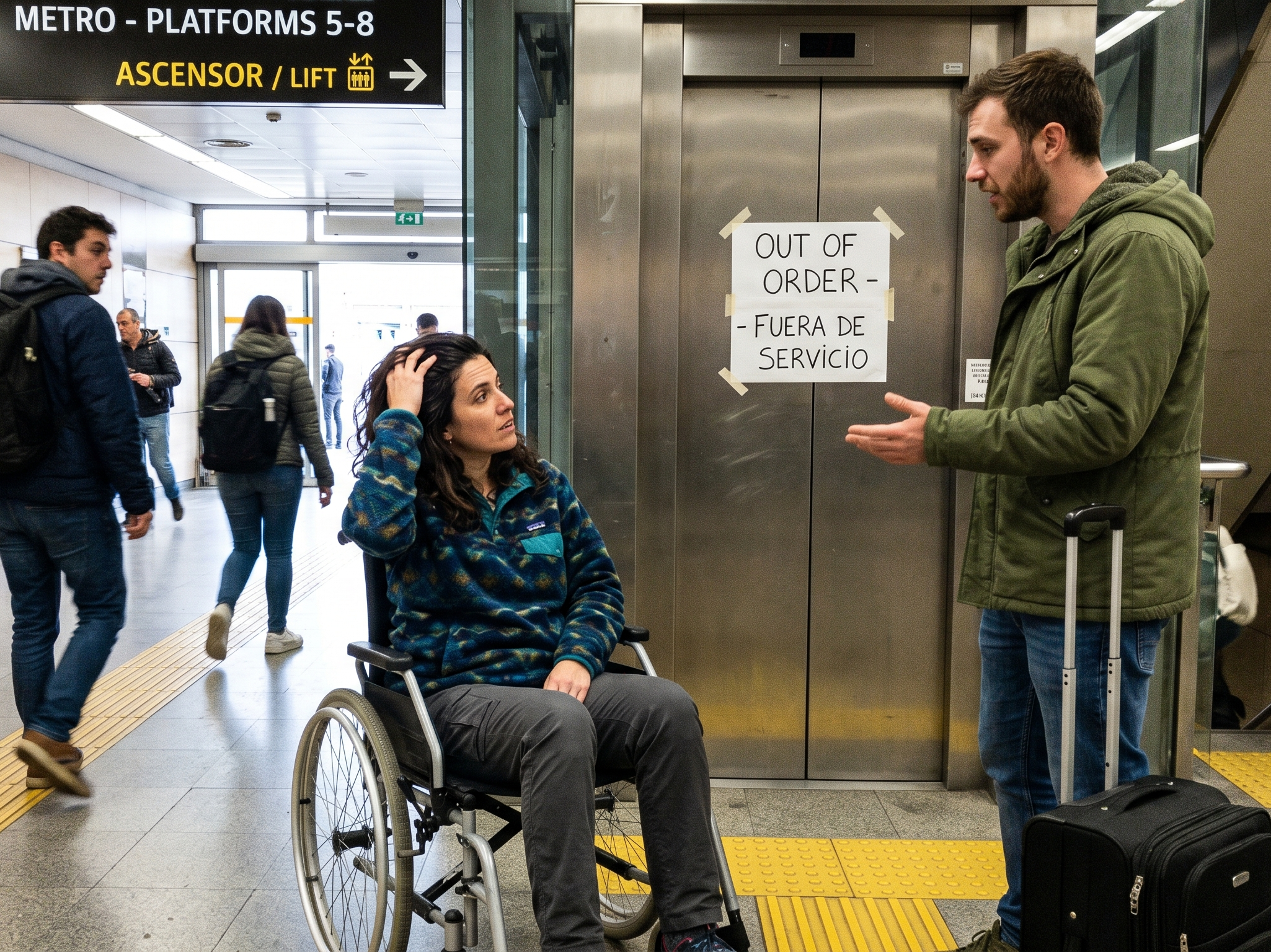
Problem 3: The broken lift
Always request a ground floor or first floor room. Before travelling by public transport, check the real-time lift status — AENA and some metro networks publish live incidents online. Have a Plan B ready.
Problem 4: Outdated accessibility information
Always confirm information directly with the venue or attraction — especially for anything important in your itinerary. Social media and traveller groups with disabilities tend to have more current information than official websites.
Problem 5: The adapted transport that doesn’t show up
Always confirm the booking the day before. Have a direct phone number, not just an online reservation. Add extra time to all transfers, and have an alternative option ready in case the service fails.
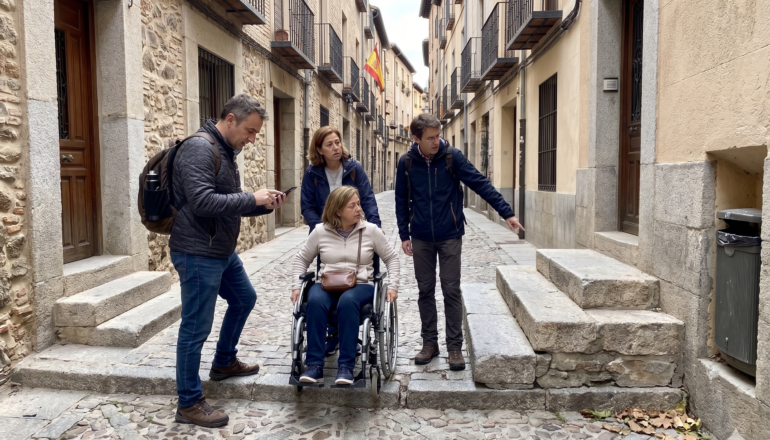
Problem 6: Historic and rural environments remain real barriers
Find out which parts are accessible and which are not, assess whether it is worth the effort, and don’t get frustrated if there are areas you can’t reach — that’s a design problem, not your fault.
Problem 7: Staff who don’t know how to help (or how not to)
Communicating clearly what you do and don’t need is entirely legitimate. Dedicated assistance staff at airports and stations tend to be better trained than general staff.
Problem 8: Adapted toilets that are poorly located or locked
Before any long journey, identify adapted toilets along the route on a map. Many cities have apps or public maps of accessible toilets. If travelling outside Spain, a Radar Key opens adapted facilities across the UK and other countries.
Problem 9: The ‘accessible’ excursion that isn’t quite
Ask for full details of the entire route: floor surface, gradients, walking distances. Request written confirmation of accessibility if there is any doubt. Be wary of excursions with no specific experience of wheelchair users.
Problem 10: Feeling invisible or treated differently
Choose venues and services that show a genuinely inclusive attitude, not just an access ramp. Reviews from other travellers with disabilities are the best indicator of this. And when you find a place that gets it right, tell them — acknowledgement goes a long way.
Have you experienced any of these situations? Need help planning your next trip without surprises? We are here to help.
