“Accessible room available.” Those three words on a booking website guarantee absolutely nothing. In Spain there is no single mandatory certification that ensures a minimum accessibility standard in hotels, which means the responsibility of verifying falls — unfairly — on the traveller.
This guide gives you the tools to avoid nasty surprises: the exact questions to ask, the warning signs to recognise, and what truly separates a genuinely accessible hotel from one that merely looks the part.
First: understand what ‘accessible’ means to each hotel
For some hotels, “accessible” means a grab rail in the bathroom. For others, it means a fully integrated design covering every detail from the car park to the bed. Before asking anything, be clear about your own specific needs: do you use a manual or electric wheelchair? Do you transfer independently? Do you travel alone or with someone?
Questions to ask before booking
About building access:
- Are there steps at the main entrance? And at any alternative entrance?
- Is the adapted parking space close to the accessible entrance?
- Is there a ramp or level access from the car park to the building?
About the lift:
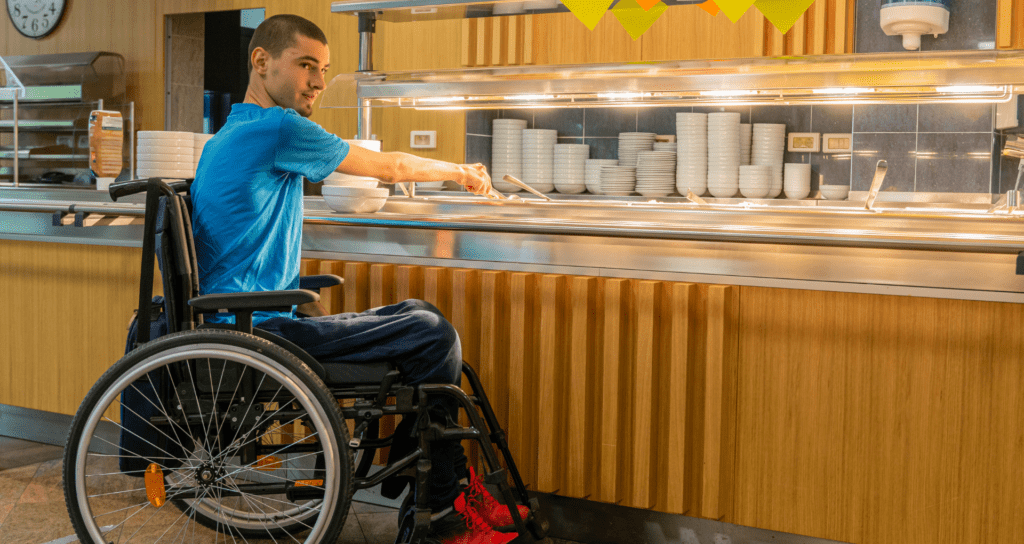
- Are the internal dimensions large enough for a wheelchair? (recommended minimum: 110 x 140 cm)
- If the lift breaks down, is there an accessible room on the ground floor?
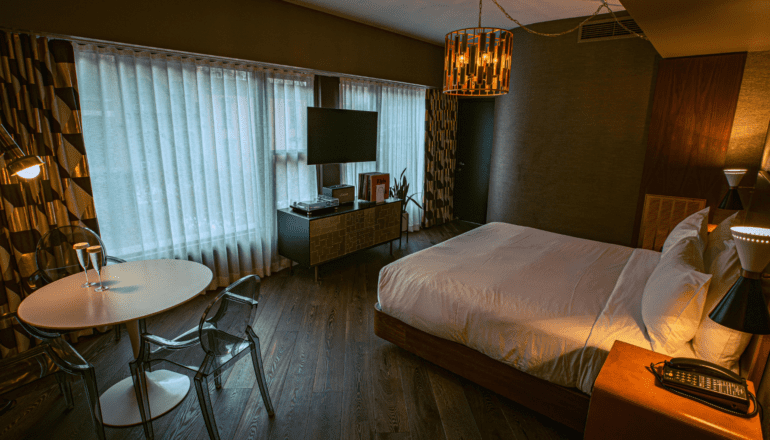
About the bedroom:
- How wide is the bedroom door? (recommended minimum: 80 cm)
- Is there enough space beside the bed for wheelchair approach and transfer?
- Are the light switches and climate controls at an accessible height?
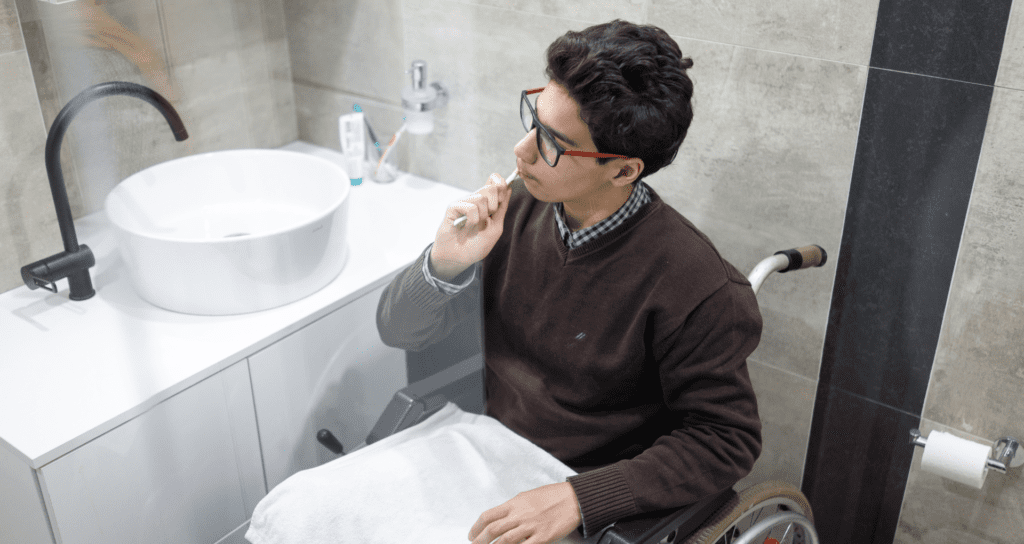
About the adapted bathroom:
- Does the shower have a level/flush entry or is there a step?
- Are grab bars on both sides of the toilet or only one?
- Is there free space under the basin for a frontal wheelchair approach?
- Does the shower have a handheld showerhead?
Warning signs: when to be cautious
Vague answers (“it’s spacious”, “it’s comfortable”), no bathroom photos on the website, only one adapted room in the entire hotel, or staff who cannot answer basic accessibility questions — all are signs the issue hasn’t been taken seriously.
What distinguishes a truly accessible hotel
- Trains its staff on how to assist — and how not to assist — people with disabilities
- Knows its own property and can answer you in detail
- Has received external accessibility training or evaluation
- Proactively communicates any limitations rather than hiding them
Useful verification platforms
Predif (predif.org) provides technical accessibility profiles of Spanish establishments. Traveller groups with disabilities on social media are the most honest resource. Airbnb has improved in recent years with filters for specific features such as roll-in shower or lift access.
Need help finding the right accommodation for your next trip? We can advise you and verify every detail on your behalf. Get in touch with no obligation.
